
Select your language


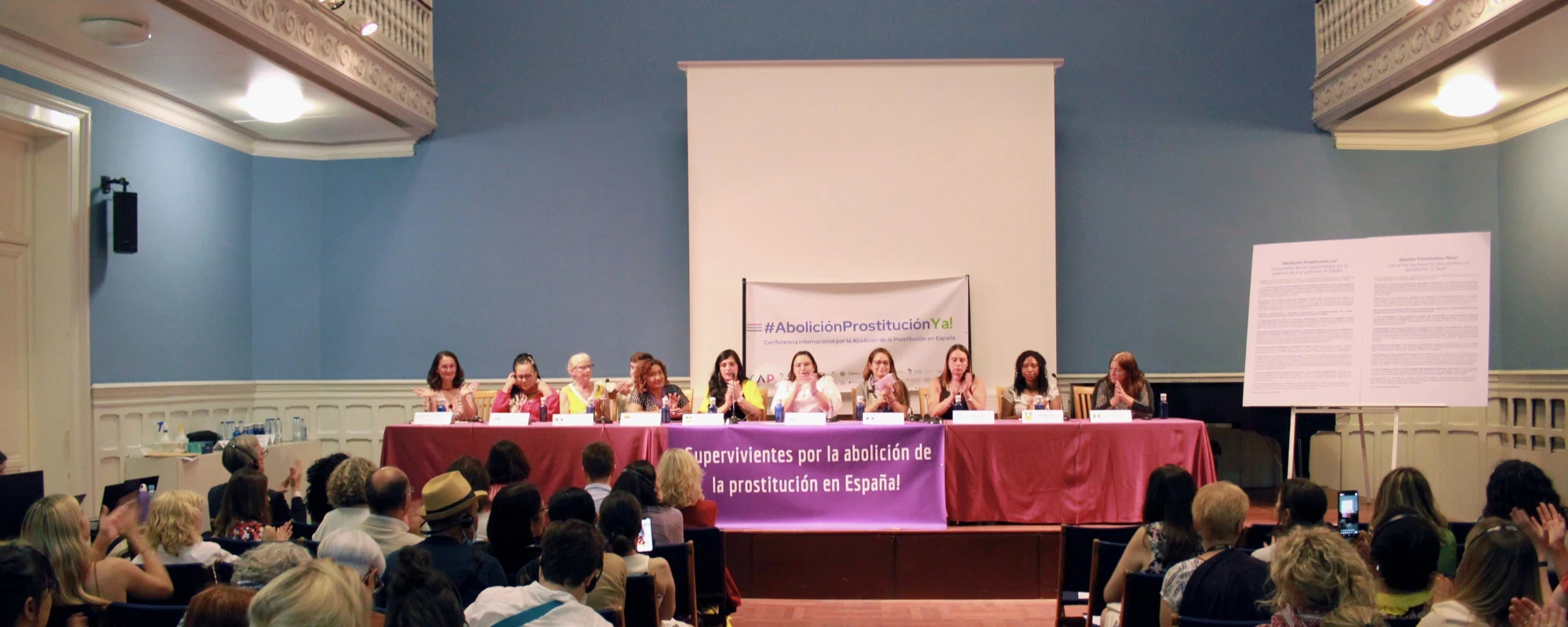
Historical conference in Madrid led by CAP International to push for the abolitionist model in Spain
16 June 2022On this occasion of the Abolitionist Week in Spain, CAP International on June 15th a historical conference in Madrid gathering 9 survivors of prostitution from 7 countries, representative from Sweden, France, Spain the OSCE and 35 grassroots and survivor-led organisations. This event took place in the continuity of the increased advocacy efforts made by CAP International, its Spanish members to push for an abolitionist legislation in the country.
"Money doesn't make you less of a sex offender."
- Amelia Tiganus, author of La revuelta de las putas and one of 9 survivors of prostitution from around the world who gathered in Madrid.
A law proposal to abolish prostitution in Spain
The conference took place eight days after the admission of an Abolitionist bill to the Spanish parliament that would include the prosecution of all forms of pimping, the penalisation of the buying of sexual acts and the recognition of a status of victim for prostituted persons, opening access to a set of all the rights created in the articles 32 to 55 of the newly adopted law "solo si es si".
In details, these new rights for victims of prostitution, equally accessible to Spanish and foreigners, include emergency medical, psychological, economic and housing assistance, the right to information, assistance services, access to rights for victims in an irregular administrative situation, recognition of the existence of sexual violence, professional reintegration programs, economic assistance for victims, police protection, information and accompaniment in the judicial field, reparations and compensation, creation of a reparation fund for victims.
A step forward towards cross-party support for an Abolitionist law
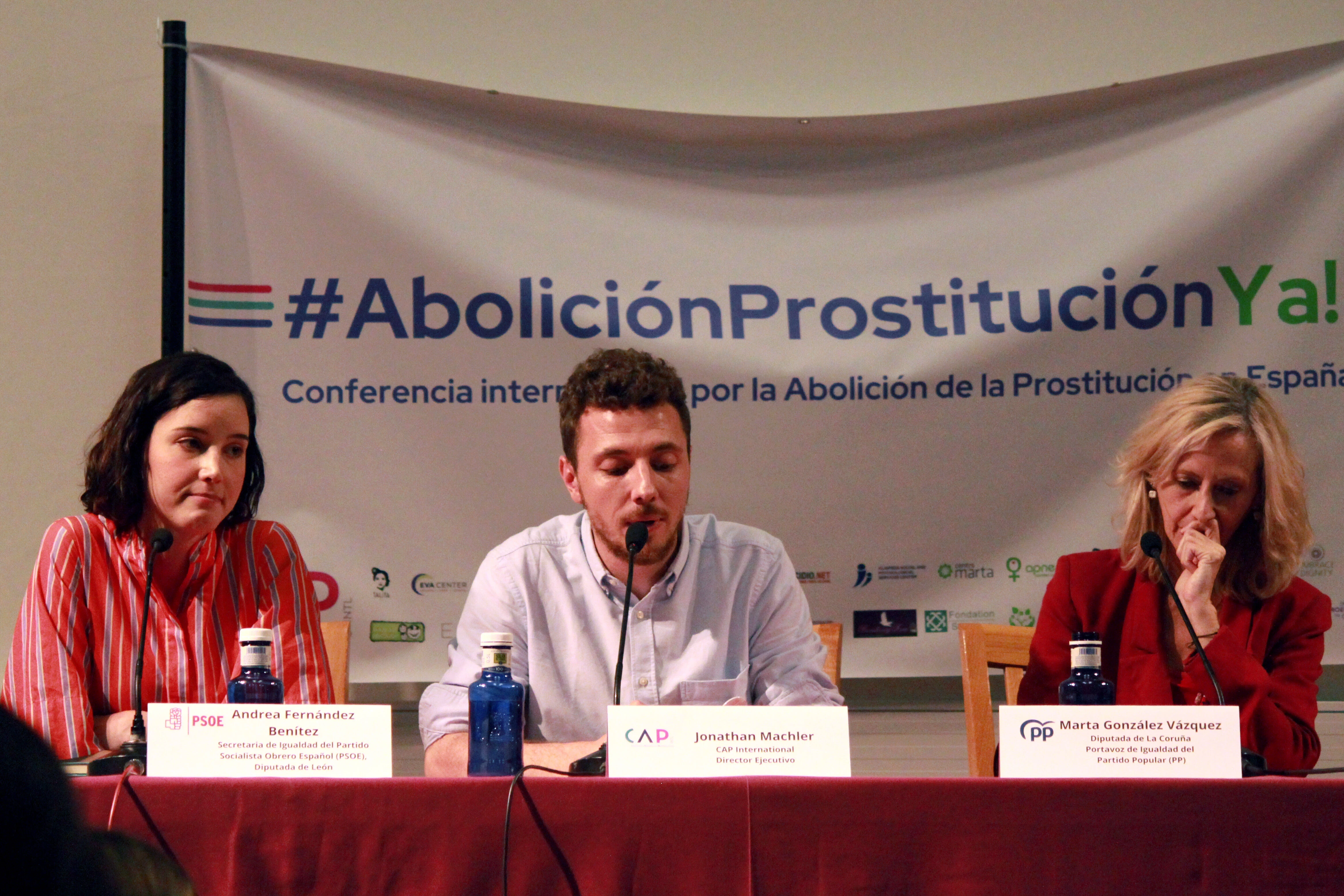
“Abolition is a path that has begun in Spain” addressed PSOE MP, Andrea Fernandez, confident that the bill would gather wide support.
“We share an aspiration: for our country to join the abolitionist countries that sanction pimping, demand and protect the victims" recalled for her part Marta Gonzalez, MP of the Partido Popular.
Both highlighted the pressure they were receiving from “businessmen” calling to warn them not to follow this legislative path. CAP International Executive Director Jonathan Machler expressed the support of the coalition for the bill “This is a major opportunity we have and we must support it.”
Representatives from Sweden, France and the OSCE in support of the abolitionist bill
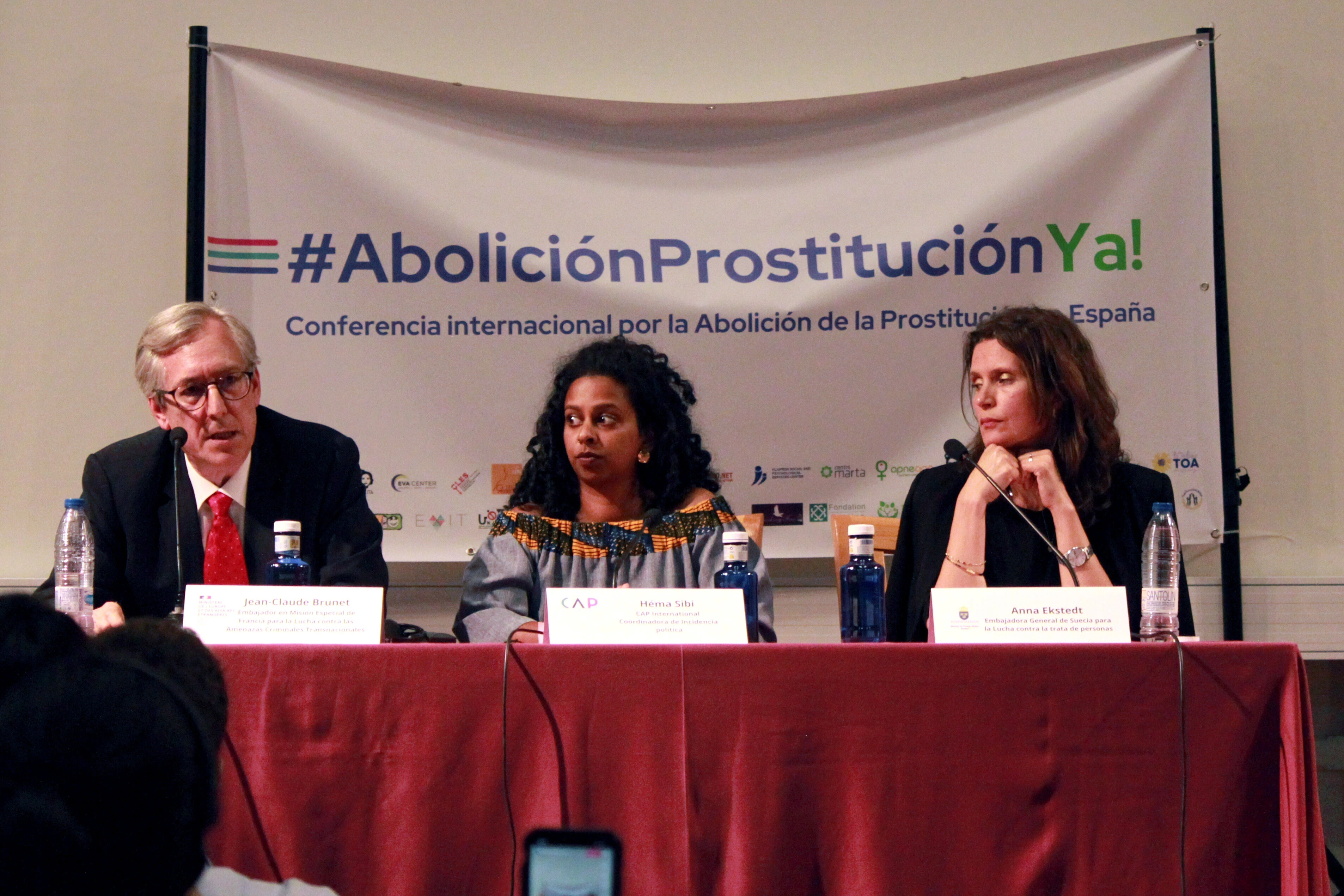
The last panel, featured France, Sweden and OSCE Officials. French Ambassador at-Large on Transnational Criminal Threats, Jean-Claude Brunet, explained the abolitionist experience in the neighbouring country, since 2016. He highlighted the normative effect of the law “Eighty percent of the French population supports the law. In 2019." He further called for "criminalising the purchase of sex with recidivism as an aggravating circumstance. In my country, we have fined 8000 sex-buyers in 6 years and very few have reoffended".
"The purchase of sex is endemic" recalled Valiant Richey, OSCE Anti-trafficking Coordinator, Special Representative and Co-ordinator for Combating Trafficking in Human Beings. It accounts for an annual volume of 3.7 billion euros in Spain. "80% of women arrive through trafficking according to the police in Spain", he reminded the audience. He called for "legislation that penalises the demand for prostitution” as one of the "most effective tools needed to prevent sexual exploitation".
Finally, Swedish Ambassador at-Large for Combating Trafficking in Persons Anna Ekstedt recalled that her country was the first nation in the world, in January 1999, to penalise those who buy sex and not those who sell it. "A very gender-related issue. It all came from the feminist movement in Sweden" she explained. The Nordic country is now trying to increase penalties for buyers. "72% of the Swedish population is in favour of this law and it has 100% support in parliament (...) In Spain, you have 40% of men who reported having purchased sex at least once in their lives. In Sweden, after 20 years of an abolitionist model, this figure is 9%.”
Find below the National & International call of Survivors for the Abolition of prostitution in Spain.
Listen to survivors.
#AboliciónProstituciónYa
Our contact details
14 rue Mondetour
75001, Paris, France
contact@cap-international.org
Newletters
Subscribe to the CAP Internationnal newsletter