
Select your language


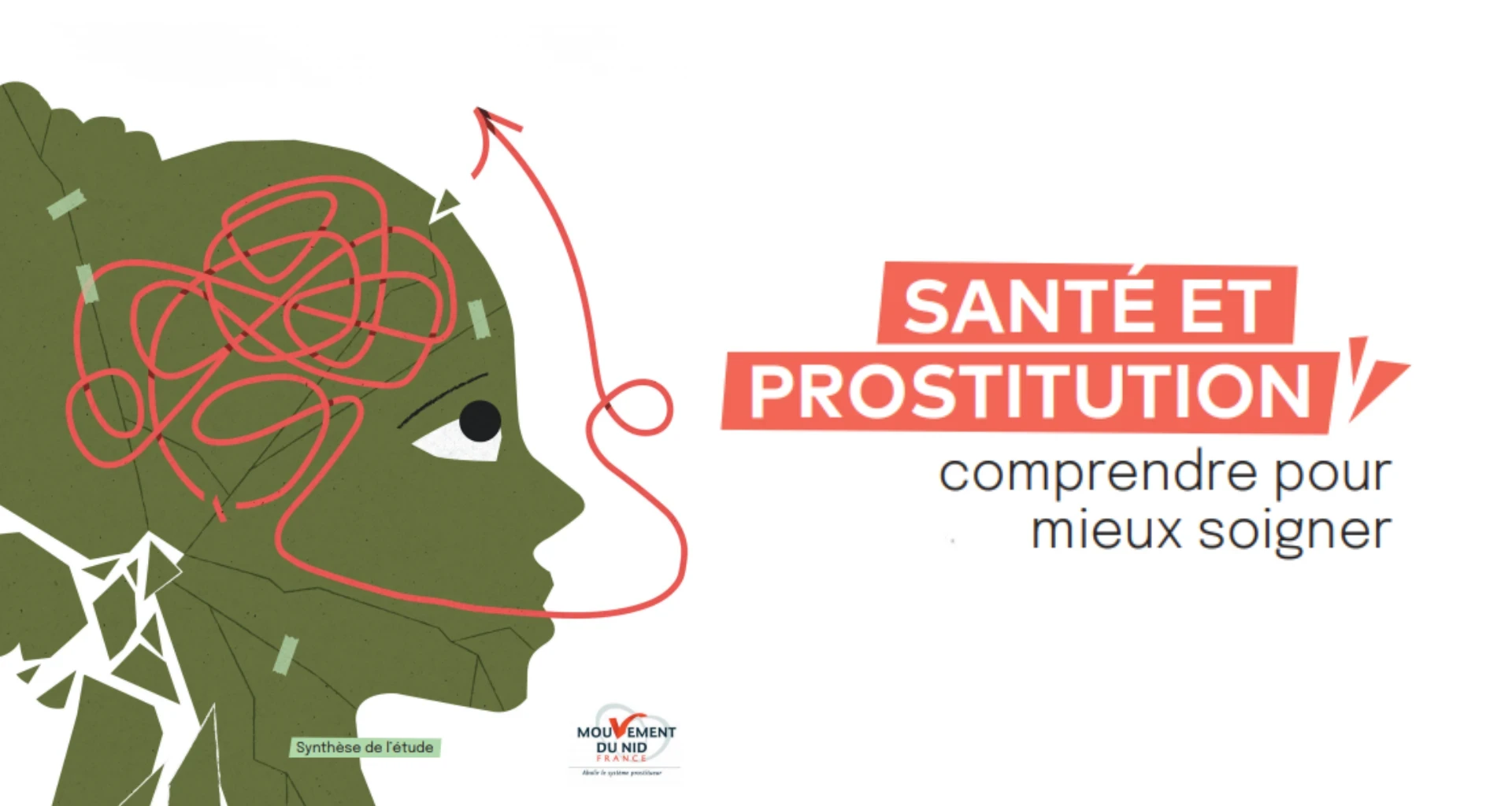
Health and Prostitution: The Mouvement du Nid’s New Study
14 April 2026The Mouvement du Nid, a French feminist organization and member of CAP International, conducted a nationwide study on the realities and health needs of people who are currently or have previously been involved in prostitution. Established in 26 departments across France, the Mouvement du Nid supports several thousand prostituted persons each year and reaches around 6,000 individuals at prostitution sites.
Carried out in partnership with Inserm and Sorbonne University and funded by the French National Research Agency (ANR), the participatory research project ASPIRE (Access to Healthcare, Health and Prostitution) was co-developed with the scientific team, a trauma psychologist, staff members and volunteers from the Mouvement du Nid as well as from the Amicale du Nid, and survivors of prostitution.
On the occasion of the publication of the study’s findings by the Mouvement du Nid, CAP International interviewed the study’s coordinator, Pauline Spinazze.
This study arose from an observation: the scarcity of data on the overall health of people in prostitution, as well as survivors of prostitution. Research and public policies have long focused almost exclusively on sexual health, often through a necessary but limited risk-management lens.
The study combines a quantitative component, based on a lengthy paper questionnaire designed to encourage interaction, completed by 258 people supported by the associations, and a qualitative component based on 45 interviews conducted with people currently or formerly in prostitution, as well as with social support workers.
1. Victims of prostitution exposed to a continuum of violence
95% of respondents reported having experienced at least one form of violence outside prostitution. These forms of violence are diverse: domestic violence, rape, intra-family violence, forced marriage, psychological abuse, and more. These prior experiences add to other vulnerability factors.
The report highlights that 96% of the prostituted persons and survivors surveyed are of foreign origin, 74% of whom come from sub-Saharan Africa. This prevalence is not surprising: according to the Central Office for the Suppression of Human Trafficking, 90% of prostituted persons in France are foreign nationals. Their precarious situations and migration pathways constitute additional vulnerability factors, exposing them more strongly to violence and exploitation.
Exposure to violence is a central reality of prostitution, whether inflicted by pimps, “clients,” or society at large. These violences take multiple forms—physical, sexual, psychological, and verbal—such as insults, humiliation, threats, and dehumanization. Prostituted persons face situations of extreme brutality. In this regard, 85% of respondents report having been forced at least once into acts imposed by “clients.” The risks to their lives are illustrated by testimonies—one from Jean-Charles, a support worker in Nice, cited in the ASPIRE study, is particularly striking: “one of the women we support had suffered 19 stab wounds.”
The ASPIRE study thus shows that violence experienced prior to entering prostitution (domestic, intra- or extra-family violence, etc.) acts as a catalyst for sexual exploitation, to which specific forms of violence are added during prostitution. This accumulation gives rise to the concept of a “continuum of violence.”
However, respondents’ reactions differ depending on the type of violence discussed. Pauline Spinazze notes that violence experienced in childhood triggers strong emotional responses, whereas violence experienced within prostitution is often reported with a certain detachment. The ASPIRE study highlights that this emotional distance reflects a particularly high tolerance threshold for suffering among prostituted persons, linked to trauma-related dissociation mechanisms developed to survive violence. These violences become normalized, and their repetition contributes to habituating victims to increasingly violent situations of exploitation.
2. Mental health: a neglected need
51% of respondents are at risk of depressive disorders and 62.5% show symptoms of post-traumatic stress. By comparison, about one-quarter of military personnel who have participated in war experience post-traumatic stress disorders.
Mental health consequences manifest through various symptoms such as headaches, stomach aches, sadness, or eating disorders. One of the most striking findings concerns sleep: 72% of respondents describe their sleep as average, disturbed, or very disturbed. Pauline Spinazze also notes that the emergence of eating disorders (present in 72% of participants) may indicate severely deteriorated health, reflecting “a very particular relationship with food.” These disorders are also closely linked to the concrete conditions of prostitution, particularly the difficulty of eating at regular times and accessing varied, balanced nutrition.
Mental health remains a blind spot in public policy on prostitution, which has historically focused on sexual health. This focus is also reflected in healthcare practices. As Pauline Spinazze explains, relaying testimonies collected during the study: “sometimes, despite multiple emergency visits or recurring gynecological appointments, no questions were asked to the women we support, even though systematic questioning about lived experiences and violence is recommended by the French National Authority for Health.” This lack of inquiry leads to partial care focused on the body, to the detriment of psychological suffering—despite the fact that everything is interconnected, as several participants noted: “when your mind isn’t well, nothing is well.”
This silence is partly explained by a lack of training among healthcare professionals regarding the realities of prostitution and its psychotraumatic consequences. Even when well-intentioned, practitioners may hesitate to address these issues for fear of being intrusive or due to lack of awareness. These institutional barriers are compounded by obstacles on the side of prostituted persons themselves: fear of stigma, taboos surrounding experienced violence, a desire to forget, or psychological defense mechanisms. Together, these factors contribute to rendering mental health issues invisible.
3. Access to healthcare hindered by numerous obstacles
Access to healthcare for people in prostitution is hindered by a combination of individual and structural barriers.
Psychological barriers limit access to care: shame, fear of judgment, minimization of experienced violence, and the desire to forget all hinder the expression of suffering, particularly psychological suffering.
These are compounded by societal and structural barriers such as language barriers, administrative status, lack of knowledge of the healthcare system, and significant economic precarity. These factors concretely restrict access to healthcare services.
Moreover, access to healthcare is currently threatened by certain ideological and political orientations, particularly through challenges to essential mechanisms such as State Medical Aid (AME). AME is a French system allowing undocumented foreign nationals to access healthcare under certain conditions. The removal or restriction of such systems would reinforce health exclusion among the most vulnerable and exacerbate inequalities in access to care. Pauline Spinazze notes that 42% of respondents benefit from AME. Restricting access to such assistance would “directly put them in danger” she emphasizes.
4. Lessons from the study and avenues for action: time and the possibility of detailed responses as keys to appropriate support
As Pauline Spinazze explains, the survey first had immediate benefits. It helped free speech around experienced violence, health status—particularly mental health—and provided new knowledge about those being supported. She gives a concrete example: one participant was able, for the first time, to speak about her alcohol addiction and the excision she had undergone. This information made it possible to adapt her support to meet her specific needs. More broadly, participation in the survey triggered psychological follow-up for several women and adjustments in the support provided by teams.
The study highlights the need to guarantee real access to healthcare—including mental healthcare—for all people in prostitution and survivors. This involves strengthening public services (increasing financial and human resources for healthcare professionals), ensuring effective access to and expansion of State Medical Aid (AME), and implementing specialized services tailored to their needs—such as dedicated spaces and collective information workshops promoting empowerment. The research also emphasizes the importance of training healthcare professionals on violence and its psychotraumatic consequences, while promoting individualized and multilingual support.
The survey also underscores the importance of raising awareness and informing those concerned so they can better understand their rights and the functioning of the French healthcare system.
Finally, the recommendations go beyond the medical field and stress the need to protect and provide social support: by ensuring access to safe accommodation through prioritizing victims of prostitution and human trafficking, strengthening the 2016 law by integrating health considerations into exit pathways from prostitution (PSP), applying the penalization of clients across all departments, and increasing resources for associations. The study also calls for raising awareness across society to better understand these situations and prevent violence.
“It is important to help people who live in prostitution. It is painful, violent, and causes great suffering. I would not wish this life on any other woman,” said one participant in the ASPIRE questionnaire.
The overall health of people in prostitution and survivors remains largely invisible. Initiatives such as the ASPIRE study help shed light on these realities, provide reliable data, and give voice to those affected, making visible phenomena that have long been under-documented in research.
Our contact details
14 rue Mondetour
75001, Paris, France
contact@cap-international.org
Newletters
Subscribe to the CAP Internationnal newsletter